GDPR & Japan’s Personal Data Protection Law: Practical Data Erasure Obligations for Enterprises
GDPR & Japan’s Personal Data Protection Law: Practical Data Erasure Obligations for Enterprises
For organizations handling personal data, data erasure is not a “cleanup task.”
It sits at the intersection of regulatory compliance, internal governance, and partner requirements.
This article summarizes practical points for designing an erasure process that you can execute and explain.
Disclaimer: This article is general information and not legal advice. Please consult official sources and professionals for final decisions.
Key takeaways
- How to think about retention, minimization, and deletion requests under GDPR
- What to focus on in Japan’s Personal Information Protection Act: security controls and vendor oversight
- Why evidence (logs/certificates) matters for audits and accountability
Erasure = compliance + accountability
In practice, “we erased it” is not enough. You often need to demonstrate:
what was erased, when, by whom, by which method, and with what result.
GDPR: what to pay attention to
- Storage limitation: avoid retaining data longer than necessary for its purpose
- Data minimization: collect/retain only what you need
- Deletion requests: establish a workflow and keep records of actions taken
GDPR includes enforcement mechanisms, and risk cannot be ignored.
Enforcement outcomes depend on context and specifics, so use official sources and professional review when designing policies.
Japan’s Personal Information Protection Act: what to pay attention to
- Security management measures: organizational, human, physical, and technical controls
- Vendor oversight: governance over processors, subcontractors, and operational controls
- After purpose fulfillment: do not keep unnecessary data—operate deletion/disposal routines
Practical checklist for enterprises
1) Create an erasure policy
- Retention periods by data type (rationale, owner, exceptions)
- Workflows for disposal/return/transfer
- Partner requirements (proof, witness, chain-of-custody)
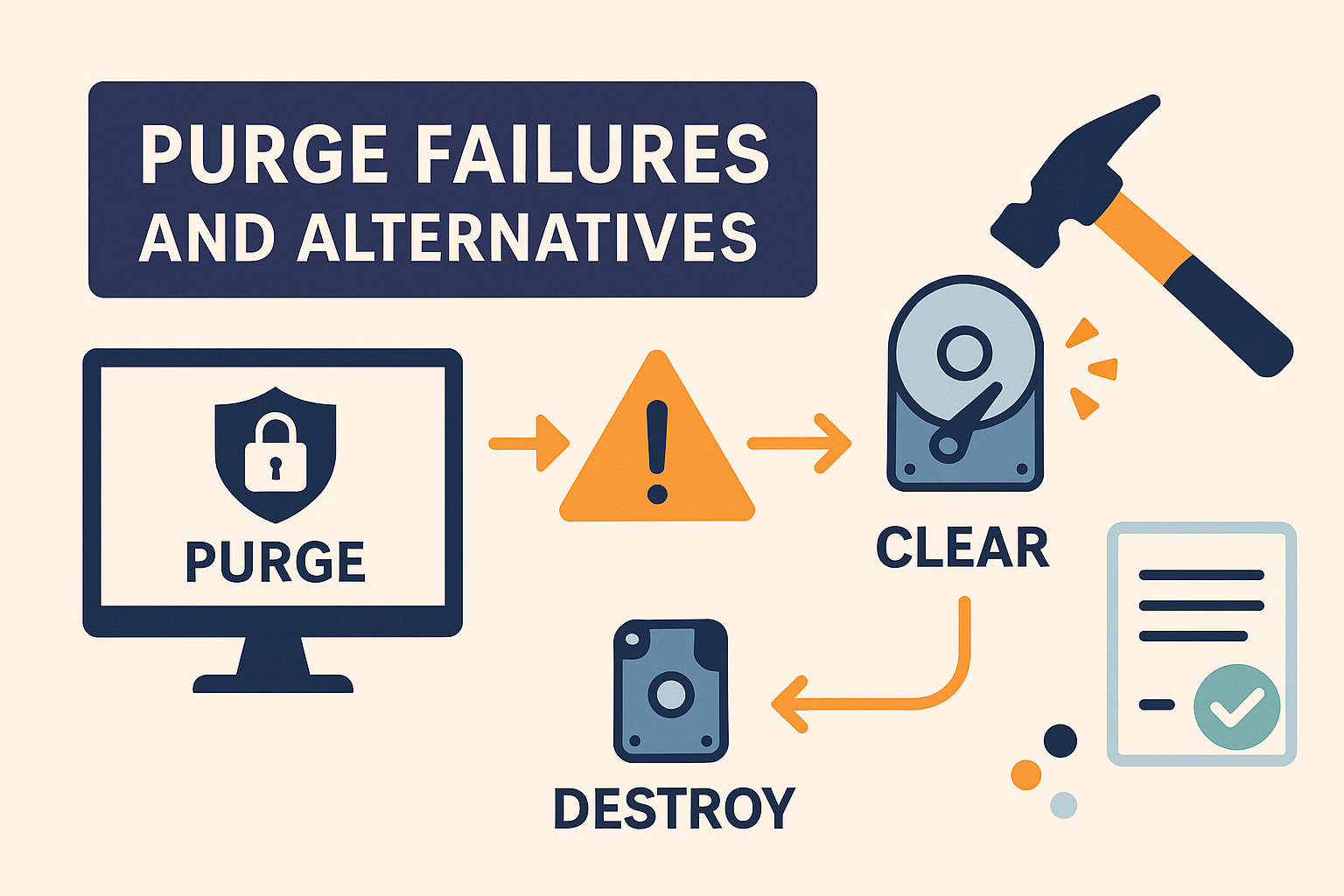
2) Choose methods that match the media
- Logical erasure: overwriting, where appropriate for the media and threat model
- Cryptographic erasure: key destruction, assuming encryption is correctly implemented
- Physical destruction: for final disposal when reuse is not required
3) Keep evidence (logs / certificates)
- Device identifiers linked to your asset ledger
- Method, timestamp, operator, and result (success/failure)
- Erasure certificates (e.g., PDF) when required
How MASAMUNE helps (general)
Beyond choosing an erasure method, you need a process that reliably runs at scale.
MASAMUNE supports operations with execution records and audit-friendly evidence management.
- Searchable execution logs
- Certificate issuance/storage for audit trails
- Process design aligned with return/transfer/disposal workflows
Summary
Data erasure is a core governance process. The most effective practical approach is building a system where you can
explain “what, when, how, by whom, and with what outcome.”
Next steps
If you want to design an erasure process aligned with your devices, workflows, and evidence requirements,
contact us via Contact. For pricing, see Pricing.