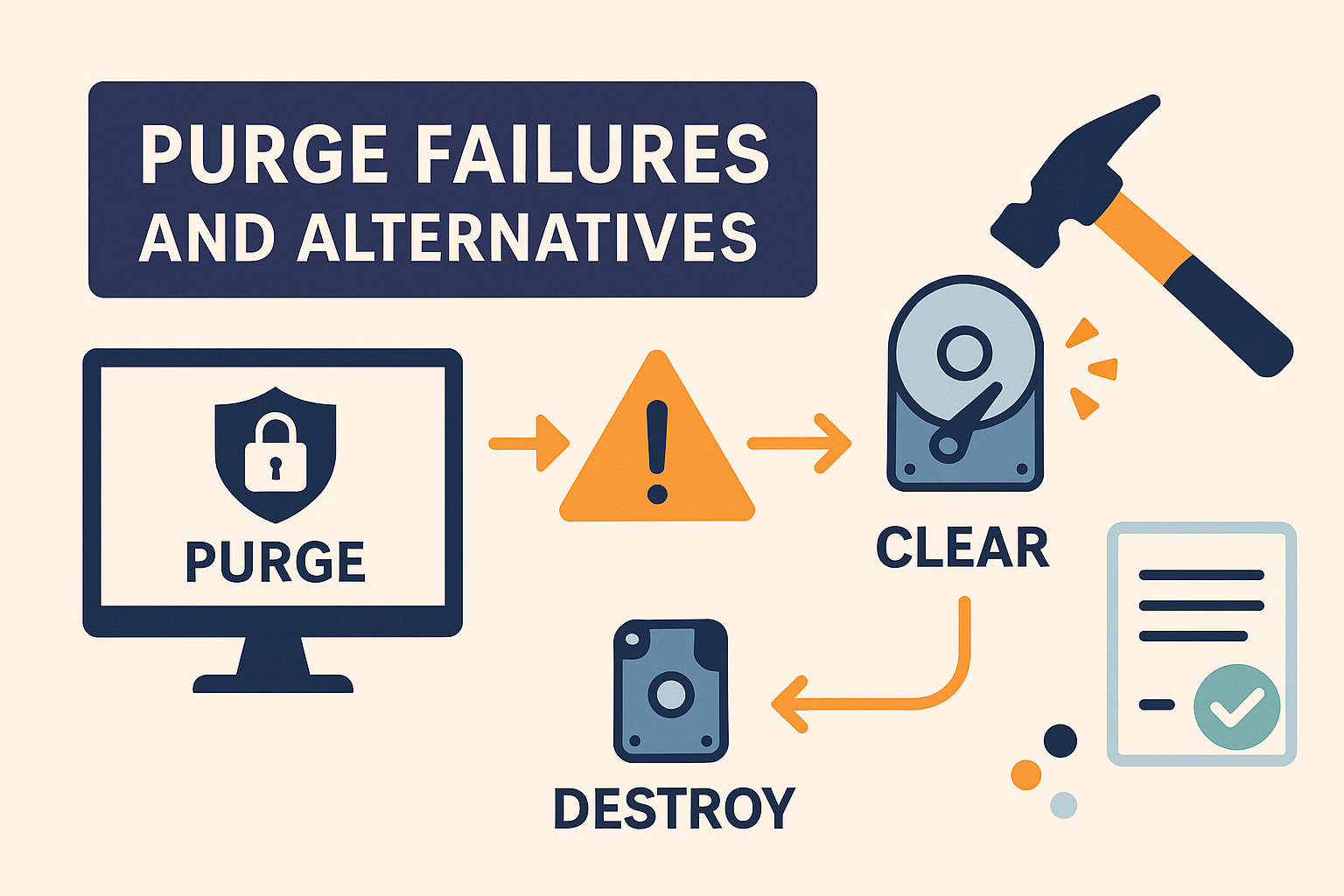
Is Purge Method Really Perfect? Failure Cases, Alternatives, and Certificate Trends
The Purge method has long been considered a standard for data erasure, but is it truly perfect? This comprehensive analysis examines real-world failure cases, explores alternative methods, and discusses current certificate trends in the industry.
Understanding the Purge Method
The Purge method is a data erasure technique that attempts to completely remove data from storage devices. While it has been widely adopted, it’s important to understand its limitations and potential failure scenarios.
Common Failure Cases
1. Network Restriction Issues
One of the most common failure scenarios occurs when network restrictions prevent proper certificate validation. This can result in incomplete erasure or verification failures.
2. Hardware Compatibility Problems
Certain device models or firmware versions may not fully support the Purge method, leading to partial data removal or complete failure.
3. Certificate Validation Errors
Outdated or invalid certificates can cause Purge method failures, especially in enterprise environments with strict security policies.
4. Timing and Synchronization Issues
In some cases, timing issues during the erasure process can result in incomplete data removal, particularly with newer device models.
Alternative Data Erasure Methods
1. Secure Erase with Network Restriction Detection
MASAMUNE Erasure’s secure erase method includes advanced network restriction detection, ensuring reliable erasure even in restricted environments.
2. Multi-Pass Overwriting
For sensitive data, multi-pass overwriting provides additional security by writing random data multiple times over the original data.
3. Cryptographic Erasure
For encrypted storage, cryptographic erasure can be more efficient and reliable than traditional overwriting methods.
4. Physical Destruction
In extreme cases where software-based erasure is not feasible, physical destruction remains the most secure option.
Certificate Trends and Industry Standards
Current Certificate Requirements
- ISO/IEC 27040 compliance
- NIST SP 800-88 guidelines
- Industry-specific standards (DoD, Common Criteria)
Emerging Trends
- Increased focus on network restriction detection
- Enhanced certificate validation processes
- Integration with enterprise security frameworks
Best Practices for Data Erasure
- Choose the Right Method: Select an erasure method appropriate for your device type and security requirements.
- Verify Certificate Validity: Ensure all certificates are up-to-date and valid before initiating erasure.
- Test in Controlled Environments: Always test erasure processes in a controlled environment before full deployment.
- Document Everything: Maintain detailed records of all erasure operations for compliance and auditing purposes.
- Use Network Restriction Detection: Implement solutions that can detect and handle network restrictions effectively.
Conclusion
While the Purge method is a valuable tool in data erasure, it’s not perfect. Understanding its limitations, exploring alternatives, and staying current with certificate trends are essential for effective data management and security.
MASAMUNE Erasure provides comprehensive solutions that address these challenges, offering reliable data erasure with advanced network restriction detection and certificate management capabilities.
Purge方式の失敗と代替手段、証明書に求められる最新トレンド
Purge(パージ)方式は、NIST SP 800-88 Rev. 1においても高いデータ消去レベルを保証する理想的な手段とされています。しかし、実際の運用現場では常に成功するとは限りません。本記事では、Purgeが失敗する典型的な原因、代替手段の流れ、そして証明書(レポート)に求められる最新トレンドについて解説します。
Purgeが失敗する典型的な原因
Secure Erase や Cryptographic Erase などのPurge方式は、実行環境やデバイスの状態によって失敗する場合があります。主な原因は以下の通りです。
- セキュリティロック(HPA/DCO領域のロックなど)によりSecure Eraseが実行できない
- SSDやHDDのファームウェア非対応でコマンドが受け付けられない
- 物理的故障や一部セクタ不良により全領域にアクセスできない
このため、Purge方式は全デバイスに対して必ず成功するわけではなく、代替手段の準備が不可欠です。
国際的に標準化された代替手段の流れ
多くのITAD業者やデータ消去サービスでは、以下の3段階フローを採用しています。
- Purge(Secure Erase/Cryptographic Erase)を試行
- 失敗時はソフトウェアでの上書き(Clear)に自動切替
- Clearでも不可の場合は物理破壊(Destroy)に移行
NIST準拠ソフトウェア(例:Blancco Drive Eraser)では、Purge失敗を自動検知しClearへフォールバック、その後もアクセス不能な場合はDestroyまで移行する機能が備わっています。
この「Purge → Clear → Destroy」の三段階対応は、国際的にも標準化された運用フローです。
証明書に求められる内容と信頼性
欧米を中心に、データ消去証明書は単なる「作業報告書」ではなく、**情報漏洩リスクに対する証跡(証拠)**として扱われます。特にPurgeが失敗した場合は、以下のような詳細記録が求められます。
- Purgeが実行されたか、その結果(成功/失敗)
- 代替手段としてClear/Destroyを行った場合の詳細(使用ツール、回数、検証方法)
- 媒体のシリアル番号、担当者、日時、環境ログ
Blancco社のレポート例では、各メディアごとのSecure Erase成功可否や代替手法の実施記録が網羅されており、電子署名付きで改ざん防止されています。
日本における課題と改善ポイント
日本では、証明書に詳細な消去方式まで記載しない企業も少なくありません。しかしNIST SP 800-88 Rev. 1では、使用した消去方式と結果を明確に記録することが重要とされています。
今後、日本市場で信頼を得るためには以下の改善がカギとなります。
- 「Purgeを試み、Clearに切り替えた」など消去過程の明記
- 検証ログ(Verify)やスクリーンショットの保存
- ADEC基準など国内規格との連動による証明レベル強化
これらの取り組みにより、監査対応や取引先からの信頼獲得、法的リスク対策が強化されます。
まとめ
- Purge方式は理想的だが、現場では失敗するケースが存在する
- 国際的に「Purge → Clear → Destroy」の三段階フローが採用されている
- 証明書は詳細な証跡として扱われ、透明性が求められる
- 日本では証明書の詳細化が課題であり、改善によって信頼性向上が可能

