

2025-01-23
Sanitization Levels and Erasure Methods | How to Choose the Right Approach
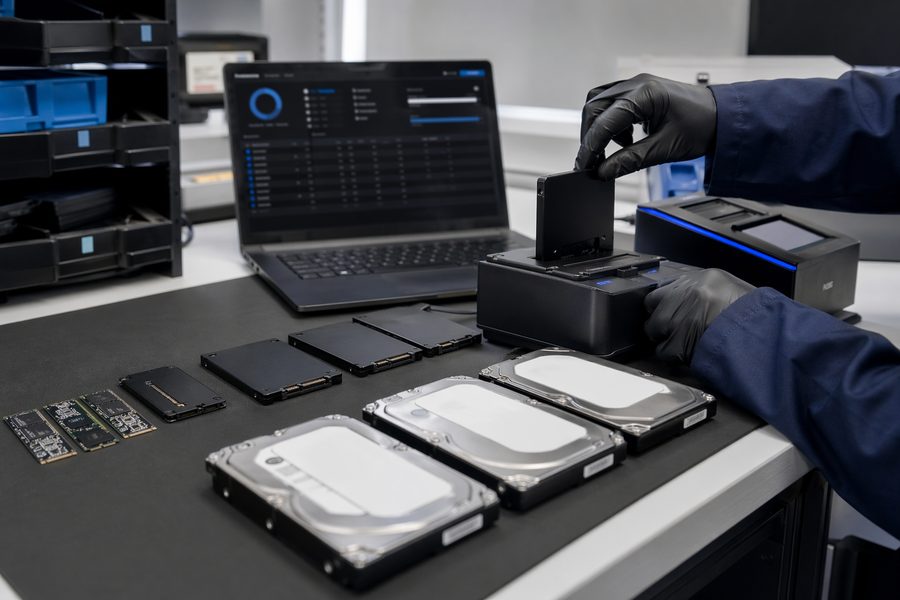
Teams often search for “the best erase method,” but the better question is which method fits the actual workflow. Media type, resale value, lease return conditions, and evidence requirements all shape the right answer. This guide turns the usual terminology into a practical decision structure.
First decide the outcome, then the method
| Workflow outcome | Typical concern | Decision focus |
|---|---|---|
| Internal reuse | Speed and consistency | Method that fits the media and keeps basic proof |
| External transfer / resale | Recoverability plus later accountability | Stronger method selection and better evidence |
| Lease return / ITAD | Partner-facing explanation | Case-linked records and certificate readiness |
| Final disposal | No reuse value | Whether destruction is necessary and how it is documented |
How to interpret the common levels
Used where teams want a practical, repeatable erase workflow against common recovery scenarios.
Used when the workflow needs stronger assumptions for external handoff, higher sensitivity, or stricter control.
Used when reuse no longer matters and the media itself should be taken out of service.
The level alone is not enough. Teams still need logs, identity linkage, and case history.
Common method families
Overwrite methods
Useful when the media and workflow are suitable for software-driven overwrite. Teams should balance speed, verification, and media behavior.
Drive-level commands
Relevant where controller-level handling matters, especially in SSD-oriented workflows.
Cryptographic approaches
Useful when encryption state and key management are part of the operational design.
Physical destruction
Relevant when final disposal outweighs reuse and the organization needs an irreversible path.
The strongest-looking method is not always the best operational choice
Teams sometimes choose the most aggressive method by default. That can be unnecessary, slow, expensive, or destructive to resale value. A better approach is to match the method to the media and the outcome, then make the evidence searchable.
Selection checklist
- Classify the media: HDD, SSD, NVMe, mobile device, or mixed estate.
- Classify the outcome: reuse, resale, return, or disposal.
- Classify the sensitivity: what risk and external scrutiny exist.
- Classify the evidence need: logs only, searchable case history, or certificates.
- Then choose the method family: overwrite, drive-level command, cryptographic approach, or destruction.
Use levels and methods as part of a wider operations decision
Standards vocabulary becomes useful only when it connects to actual assets, workflows, and proof requirements.
Frequently asked questions
Q. Is there one best sanitization method for every situation?
No. The right choice depends on media type, outcome, sensitivity, and evidence expectations.
Q. Should teams always pick the most aggressive method?
Not always. More aggressive methods can increase time, cost, or destroy reuse value, so the choice should match the workflow and risk model.
Q. How should teams use Clear, Purge, and Destroy in practice?
Use them as decision labels within a policy that also accounts for media type, return conditions, and evidence requirements.