

2026-05-13
iPhone Data Erasure Software Guide | Resale, Return, and Evidence
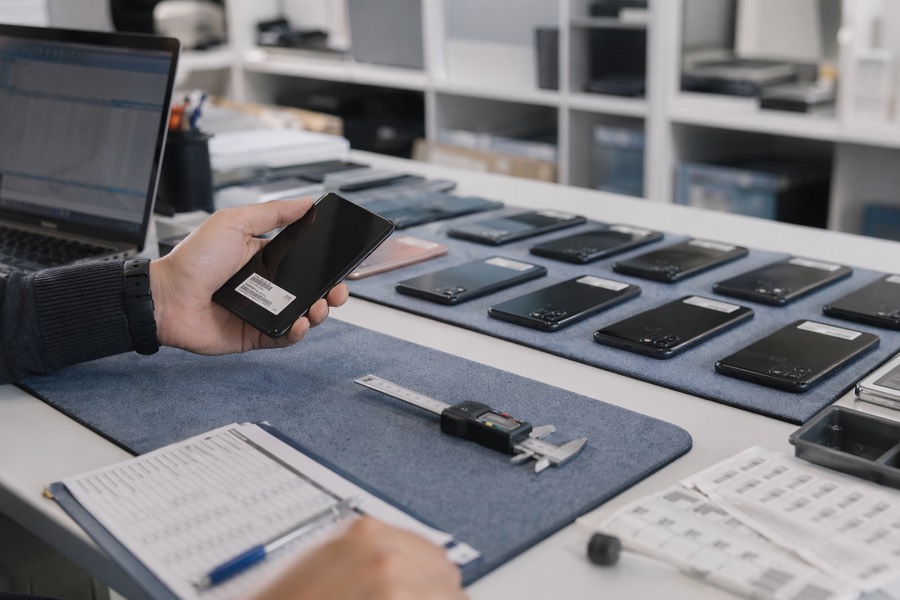
iPhone erasure is rarely only about clearing one device. In real operations, teams also need to manage Activation Lock, ABM / MDM state, handoff conditions for resale or return, and the evidence trail that explains what was processed, by whom, and when. The real question is not only whether an iPhone can be erased, but whether the same workflow can be repeated at scale.
Who this page is for
Need lock checks, erase results, and evidence output in the same handoff flow.
Need to clear batches of iPhones before return, disposal, or internal reissue.
Need more than a PDF file and want operator history and runtime context preserved.
Need a path from small validation into field throughput without changing the operating story.
What matters most in iPhone erasure operations
iPhone hardware is usually more consistent than Android, so operational quality depends more on how well the assumptions are handled before erasure starts.
- Activation Lock state
- ABM / MDM management state
- Evidence by job and operator
- Resale and return handoff conditions
How to read major iPhone families operationally
| Family | Typical generation | Why teams care | What to confirm first |
|---|---|---|---|
| iPhone 16 / 15 | Current and near-current | High reuse value means evidence quality directly affects resale confidence. | Lock state, handoff certificate, and job association. |
| iPhone 14 / 13 | Heavy enterprise band | Often appears in larger return or refresh batches. | Department-level grouping and operator traceability. |
| iPhone 12 / 11 | Common reuse inventory | Frequently mixed across resale and ITAD scenarios. | Pre-erase intake rules, lock review, and resale readiness checks. |
| SE / older models | SE, 8, 7, 6s | Often left in bulk refresh projects and needs stronger batch discipline. | Support band, lot handling, and evidence retention method. |
For iPhone, evidence depth often defines operational quality
A standard reset may clear a device, but it does not automatically answer which operator handled it, which job it belonged to, or what proof should be shown to a customer or audit reviewer later. For iPhone teams, the better buying lens is not only “can it erase?” but “can it preserve the workflow story?”
The MASAMUNE operating core for iPhone
Lock state and management assumptions should stay inside the same operational route.
Teams need more than a one-off PDF. They need grouped history and explainable output.
MASAMUNE uses up to 50 simultaneous connected devices as the public operating benchmark.
The same device population may move between those contexts, so cloud-managed evidence matters.
Frequently asked questions
Q. What is the difference between standard iPhone reset and MASAMUNE?
A standard reset may clear an individual device, but resale and return operations also need job-level records, certificates, and operator traceability. MASAMUNE keeps erasure and evidence in one operating flow.
Q. Can it help with Activation Lock and managed iPhone workflows?
Yes, as part of the pre-erasure operating model. For resale or return projects, lock state and management state must be checked before the erase run itself.
Q. What kind of iPhone volume does this assume?
The workflow scales from small validation runs to field operations with up to 50 simultaneous connected devices, depending on layout and hub design.